
The Topic I Didn’t Want to Cover… LLPAs
This topic is something I never thought I would talk about, but I’ve had a lot of questions about it lately & it needs to be addressed. Today I want to share information about Loan Level Pricing Adjustments (LLPAs).
What is an LLPA?
For sake of what we are talking about today, we are only referring to conventional loans. LLPAs are basically risk-based adjustments.
For example, if you have a great credit score and a large down payment, then you are going to get better rates. Alternatively, if you have lower credit scores and lower down payment, then your rate is going to be higher.
This is the actual matrix – the new chart from Fannie Mae directly:
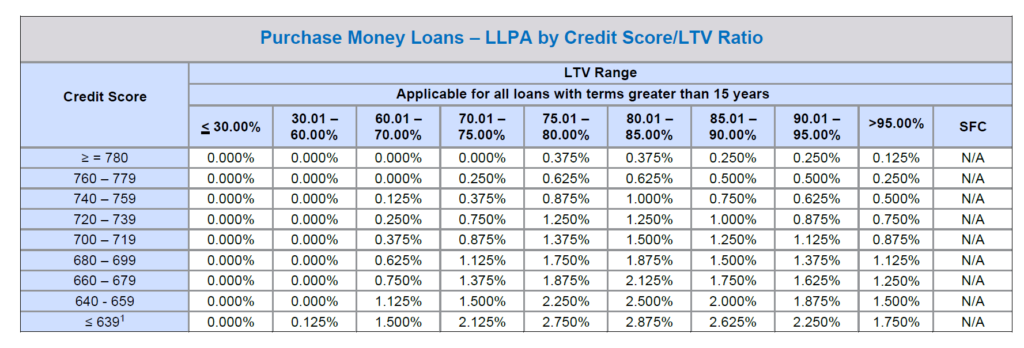
There is a lot of conversation in the media about this topic. It’s interesting that the news channels have picked this up. One reason it is interesting is because Fannie and Freddie are making changes all the time, but these ongoing changes never make the news.
How Things are Changing
But this time, Fannie and Freddie did something very unusual, which is probably why it hit the news headlines. They made adjustments to the lower down payment portion and the lower credit score, which made the pricing quite a bit better.
This change captured everyone’s attention: why are they supplementing people with lower credit scores and lower down payments by making people with better credit scores and down payments pay more?
I don’t know if I agree with this narrative. The reality is that they gave a gift to the lower sections, but to say that the higher credit score borrowers are paying for it doesn’t necessarily make sense.
How Much is Pricing Being Changed?
Here’s another graphic that shows how much pricing is being affected in the different ranges (compared to the old matrix):
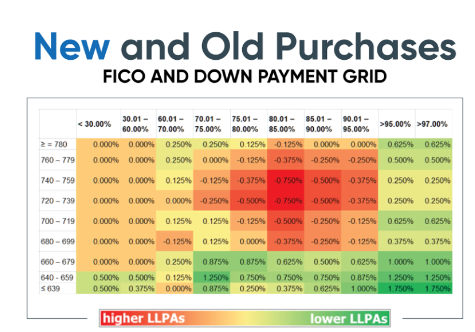
Historically speaking, these are like an insurance actuary table. They are looking at risk and making adjustments accordingly.
Here’s the irony: people are most up in arms about the better rates for people with the lowest credit scores and down payments. What is interesting is that those people aren’t going to get conventional loans, even with these changes.
Even though they are being offered a pricing break, they won’t get a break on the mortgage insurance premium. And if new home buyers are stepping into the market with low credit scores and low down payments, then we are almost always doing FHA loans.
Yes, it’s weird that they make these changes. But in reality, it’s not going to really change the way the front-line mortgage providers are going to be helping home buyers for this demographic. These people will likely still go with FHA loans.
The other ironic thing is that people with higher credit scores are actually being incentivized to put less down in order to get a better rate on a conventional loan.
Hopefully that helps to clarify this topic! It’s difficult and kind of technical. If you have any questions, feel free to reach out to me directly and we can talk about your unique situation.
Bill is happy to run the numbers for you, with no pressure.